
Types of Pool Filters: Which is Right for Me?
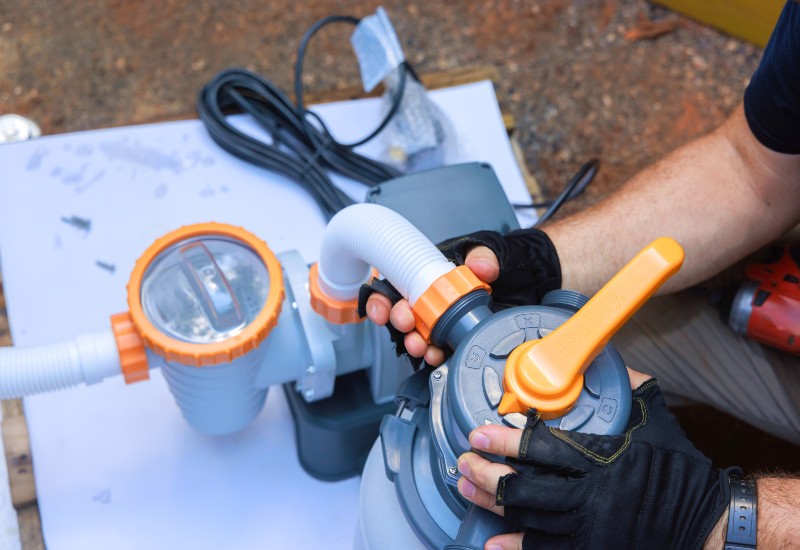
Types of Pool Filters: Which Is Right for Me?
A pool filter keeps your pool looking clean and clear. Water leaves the pool looking a little “lived-in” (leaves, dirt, sunscreen, bugs, mystery floaties). It gets sucked into a system that pushes it through a filter that grabs all the gross stuff, then sends the clean water back out as if nothing happened. Without a filter, the pool doesn’t stay a “swimming pool” for long. It can quickly turn into a warm outdoor soup situation.
Main Pool Filter Types
Most residential pools use one of three filtration systems, each with different strengths and maintenance needs. Here’s some more information on each:
1. Pool Sand Filters
These are the most common and typically the most budget friendly. Water passes through a tank filled with specially graded silica sand that traps debris. Sand filter = dirt gets trapped in a deep sandbox.
They’re popular because they’re simple, durable, and low maintenance. The tradeoff is that they don’t filter out the smallest particles compared to other systems, so water clarity can be slightly less “polished.” Sand usually needs to be replaced every 5–7 years.
2. Cartridge Pool Filters
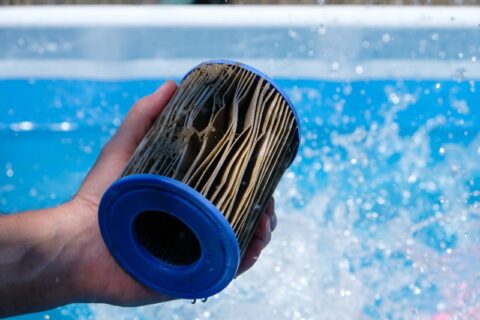
Cartridge systems use pleated fabric cartridges instead of sand. Cartridge filter = water squeezes through a super-fine coffee filter. The increased surface area allows them to capture much finer debris while maintaining good flow.
They’re often preferred for residential pools because they don’t require backwashing (which saves water). Maintenance involves rinsing the cartridge periodically and replacing it every 2–4 years, depending on use.
3. Diatomaceous Earth Filters for Pools
DE filters provide the highest level of filtration. They use a powder made from fossilized algae (diatomaceous earth) coated onto grids inside the filter tank. DE filter = ultra-fine polishing system that catches the tiniest stuff
They can remove extremely fine particles, giving water a very “sparkling” clarity. However, they require more maintenance and careful handling of DE powder during cleaning and recharging.
How Pool Filters Fit Into the Full System
A pool filter doesn’t work alone. It’s part of a circulation loop. If any part is undersized or dirty, the whole system suffers from cloudy water, algae growth, or poor circulation. Here’s what’s involved:
- Pump (moves water)
- Skimmer and drains (collect water)
- Filter (cleans water)
- Return jets (send clean water back)
Maintenance Basics
Ignoring maintenance is usually what causes “mysteriously dirty” pool water, even when chemicals are balanced. Regardless of filter type, routine care is what keeps water clean:
- Clean or backwash when pressure rises ~8–10 PSI above normal
- Inspect O-rings and seals for leaks
- Keep pump baskets and skimmer baskets clear
- Replace filter media on schedule
When Filters Start to Fail
Signs your filter may need attention or replacement include:
- Water stays cloudy even after chemical balancing
- Pressure gauge reads unusually high or low
- Visible return jet weakness
- Frequent algae despite normal chlorine levels
Does It Really Matter Which Type I Get?
Yes, it matters, but not in the sense of “one is right, and the others are wrong.” It’s more about how you want to live with your pool. All three types (sand, cartridge, DE) will keep water safe when sized correctly. The difference is really clarity, maintenance style, and cost over time:
Sand Filter = Easiest Life
The sand pool filter is best for people who want low effort and don’t care about perfection-level clarity. Here’s why:
- Most forgiving and durable
- Lowest upfront cost
- “Good enough” water clarity for most people
- Needs occasional backwashing (uses water)
- Slightly less “sparkly” water than others
Cartridge Filter = Balanced Sweet Spot
This is a great middle-of-the-road option. The water is cleaner than the sand filter, but it’s not as heavy as the DE Filter. People choose the cartridge pool filter because:
- Better water clarity than sand
- No backwashing (saves water)
- You just pull and hose off the cartridge
- Slightly more hands-on cleaning than sand
DE Filter = Premium Clarity
The diatomaceous earth filter is best for people who want “resort-level” water and don’t mind more upkeep (or plan to outsource their upkeep). With the DE filter, you can expect:
- Cleanest, clearest water of the three
- Captures extremely fine particles
- More maintenance steps and messier cleaning (DE powder handling)
- Higher upfront and operating complexity
Why Choose Us?
At Millennium Pools & Spas, we’ve spent over 30 years out in the field keeping pools running across Virginia, Washington D.C., and Maryland, and if there’s one thing we’ve learned, it’s that most water issues start with the filter. We service, repair, and troubleshoot filters every day, so we know what works, what fails, and why. We can also help you choose the right filter for your pool and keep it properly maintained so it performs season after season. Call us today or reach out through our contact form to schedule service with a team that understands pool filters inside and out.
If your pool’s been looking a little murky lately, your filter might be trying to tell you something. Pool filters are the quiet workhorses of your…