
What Is a Gunite Pool?
What Is a Gunite Pool?
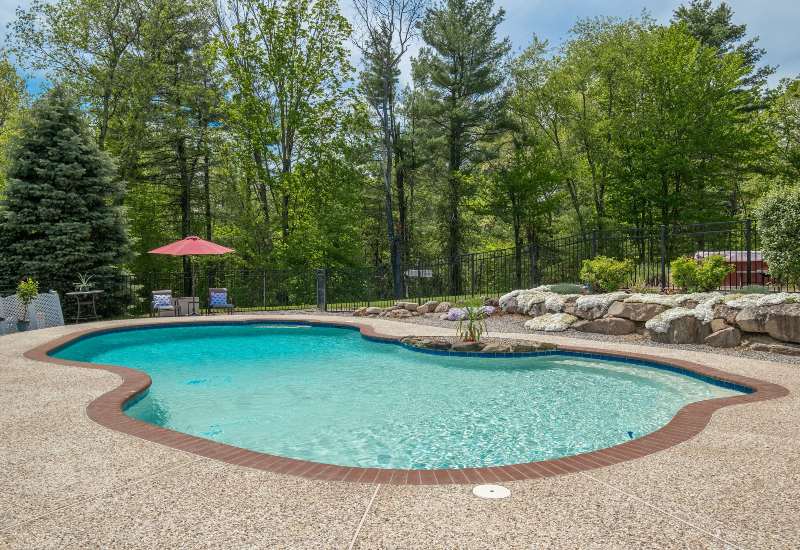
A gunite pool is a highly customizable, in-ground concrete swimming pool. The term “gunite” refers to the application process, where sand, cement, and water are mixed on-site and applied through a high-pressure hose onto a steel rebar framework. Once it’s sprayed, it’s sculpted into the final pool shape and allowed to cure into a solid, rock-like structure. This method creates an incredibly durable, solid shell that can be molded into virtually any shape or size.
How It’s Built
It’s actually a pretty interesting process. Here’s how it works:
- Excavation: The pool shape is dug out of the ground.
- Plumbing & Steel: Plumber lines are laid, and a heavy grid of steel rebar is installed to reinforce the structure.
- Spraying: Gunite (a specialized concrete mix) is sprayed at high velocity over the steel cage to form the thick pool shell.
- Finishing: Once the shell cures, a smooth, watertight interior finish is applied. Options include traditional plaster, exposed aggregate, or tile.
Benefits of Gunite Pools
Gunite pools are popular for their durability and design flexibility. They’re considered one of the strongest in-ground pool types and can last for decades with proper maintenance. They also allow for custom features like tanning ledges, integrated spas, waterfalls, and unique layouts that aren’t possible with pre-formed pool shells.
Advantages:
- Limitless Design: Can be built in any custom shape, depth, or size to fit unique backyard layouts.
- Ultimate Customization: Perfect for adding features like tanning ledges, beach entries, custom spas, and rock waterfalls.
- Durability: The rock-hard, steel-reinforced shell is built to last for decades.
Considerations:
- Higher Cost: Typically, one of the most expensive inground pool types to build and install.
- Longer Installation: The construction process usually takes several weeks or even months.
- Maintenance: The rougher surface (if finished with standard plaster) can be slightly abrasive and may require more brushing and chemical balancing than vinyl or fiberglass pools.
How to Maintain a Gunite Pool
Because the surface is porous compared to fiberglass or vinyl, gunite pools typically require more upkeep. You’ll mostly need to focus on protecting the surface and keeping water chemistry stable. It needs consistent care to prevent staining, algae growth, and early wear. Over time, even well-maintained gunite pools may need resurfacing, but steady upkeep goes a long way in extending the life and appearance of the finish.
Many homeowners feel the longevity and customization options outweigh the maintenance demands, plus you can always hire a professional team to maintain your pool for you.
Gunite Pool FAQs
How Long Does It Take to Build a Gunite Pool?
The construction process is extensive and requires patience. It typically takes 4 to 6 months from excavation to the final finishing touches, though the physical structural work is usually completed in 6 to 8 weeks.
How Long Do Gunite Pools Last?
Because of their heavy-duty steel and concrete construction, gunite shells can last indefinitely. However, you may need to resurface your gunite pool every 10 to 15 years.
What Are the Different Types of Interior Finishes?
The three most common interior finishes are:
- Plaster (Marcite): The traditional, smooth, and most budget-friendly finish made of crushed marble and cement.
- Quartz: Crushed quartz blended into cement; it is denser, more resistant to wear, and can be diamond-polished if it ever gets rough.
- Pebble: River-polished stones mixed with cement. This is the most durable, natural-looking, and longest-lasting option.
Can I Use a Saltwater System in a Gunite Pool?
Yes, but you must be mindful of your finishes. Saltwater is safe for modern high-quality finishes (like pebble or quartz), but you should only use pure pool salt (without iodine or anti-caking agents) to avoid staining the plaster.
Why Choose Millennium Pools & Spas?
Gunite pools are built to last, but they’re not “set it and forget it.” Over the years, the surface changes, the equipment wears down, and small issues start to show up in ways that aren’t always obvious at first. At Millennium Pools & Spas, we work with gunite pools every day in Virginia, Washington, D.C., and Maryland. We understand what it takes to bring them back to their best condition.
If your gunite pool needs attention or you’re ready to get ahead of future issues, reach out through the contact form or call to speak with our professional team.
Draining a pool sounds easy, but if you don’t know how to drain your pool safely, it’s one of those jobs that can go very wrong, very…