
Pool Closing Tips
Top Pool Closing Tips for a Stress-Free Winter
The summer swimming season eventually comes to an end. Homeowners across Virginia, Washington DC, and Maryland must prepare their backyards for freezing temperatures. Closing your pool correctly protects your valuable investment from severe weather conditions. A proper shutdown routine prevents structural damage and makes reopening much easier next spring. As the team at Millennium Pools & Spas, we possess over a century of combined experience handling residential and commercial swimming facilities. Our technicians understand exactly what it takes to protect your property from harsh winter weather. We want to share our proven strategies to help you maintain a beautiful, functional swimming space year after year.
Why Closing Your Pool Properly Matters
Taking the time to winterize your swimming pool provides several long-term benefits for your property. Homeowners who skip important shutdown steps often face expensive repairs when the weather warms up again. Protecting your equipment now saves you significant frustration later:
- Prevents Freeze Damage: Water expands as it freezes. This sudden expansion can easily crack underground pipes, break pump housings, and destroy expensive filtration equipment.
- Stops Algae Growth: Proper chemical treatments keep the water clear. Blocking out sunlight prevents stubborn green algae blooms from taking over your beautiful backyard.
- Protects your Structure: Applying expert inground pool closing tips correctly shields your plaster and tile from permanent stains and damaging scale buildup.
- Saves Time and Money: A clean and well-maintained environment requires far less effort to open in the spring. You will spend less money on corrective chemicals and replacement parts.
Step-By-Step Pool Closing Process
Following a systematic approach ensures you do not miss any critical winterization tasks. We highly recommend completing these eight distinct steps to fully protect your property. Working through this list systematically guarantees a safe and thorough shutdown.
Balance Pool Water Chemistry
You must balance pool water chemistry about a week before you plan to close up for the season. Proper water balance prevents corrosion and scale buildup along your walls and internal equipment.
- Adjust the pH level to fall strictly between 7.2 and 7.6.
- Keep total alkalinity balanced between 80 and 120 parts per million.
- Ensure calcium hardness remains stable around 200 to 400 parts per million.
- Test the water multiple times to confirm the levels remain stable.
Add Winterizing Chemicals
Standard summer maintenance chemicals will not last through the long winter months. You need specialized products designed to keep the water pristine while the circulation system remains turned off.
- Apply a heavy chlorine shock treatment to kill any existing bacteria.
- Add a high-quality winter algaecide to prevent green and yellow water.
- Use a metal sequestrant to stop dissolved metals from staining the pool plaster.
- Allow the pump to run for a full day to distribute these chemicals evenly.
Clean Your Pool Filter
Leaving dirt and debris in your filtration system can cause permanent degradation over the winter. Cleaning pool filter components thoroughly stands as a mandatory step for long-term equipment health.
- Backwash sand or diatomaceous earth filters completely until the water runs clear.
- Remove and rinse cartridge filters thoroughly with a high-pressure garden hose.
- Clear out all skimmer baskets and empty the main pump strainer basket.
- Store fragile filter components indoors to protect them from freezing temperatures.
Lower the Water Level
Freezing water at the surface can shatter your decorative tiles and permanently damage the skimmer housings. You should reduce the overall water volume to create a safe expansion buffer zone.
- Drain the water about four to six inches below the skimmer line for solid covers.
- Drain the water eighteen inches below the skimmer line for standard mesh covers.
- Use a heavy-duty submersible pump to remove the excess water safely and efficiently.
- Direct the drained water away from your home foundation to prevent yard flooding.
Drain and Store Equipment
Any water left inside your pumps or heaters will freeze and break the internal mechanical components. You must remove all residual moisture from your expensive hardware before the first freeze.
- Remove the drain plugs from your pump, filter tank, and pool heater.
- Store the loose plugs directly in the pump basket so you can find them easily next spring.
- Take out removable ladders, diving boards, and metal handrails.
- Store all detached accessories in a dry garage or utility shed.
Blow Out the Plumbing Lines
Underground pipes are highly susceptible to bursting in freezing temperatures. Removing the water from these hidden lines is the most critical technical task of the entire shutdown routine.
- Use a heavy-duty shop vacuum or an air compressor to force water out of the plumbing.
- Watch for steady air bubbles at the return jets to ensure the lines are totally clear.
- Insert tight winterizing plugs into the return jets and skimmers.
- Add specialized swimming pool antifreeze to the lines for an extra layer of protection.
Install the Winter Pool Cover
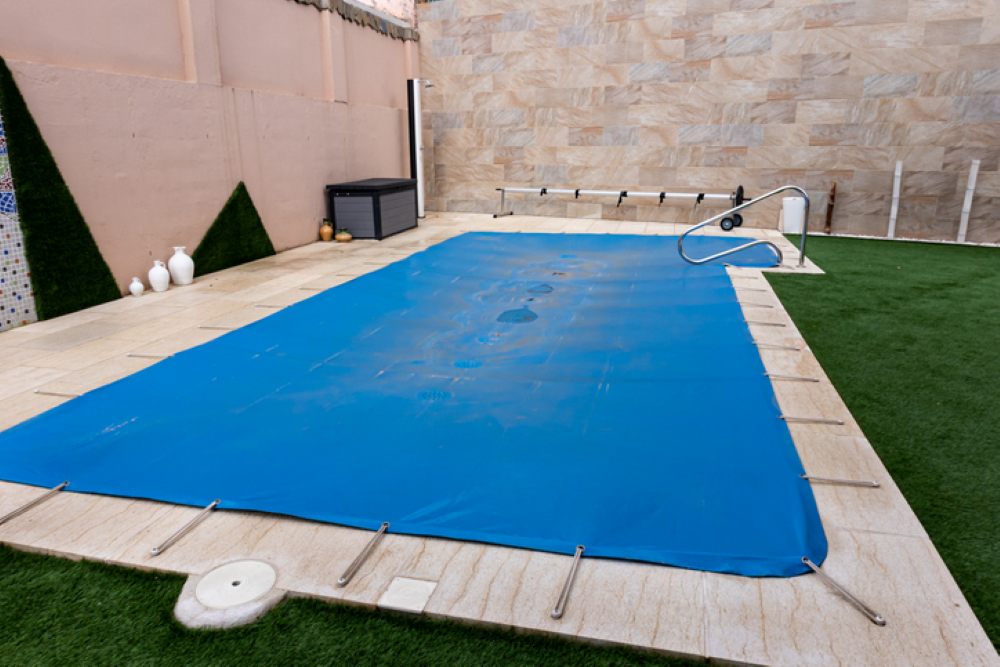
A high-quality cover acts as a physical shield against falling debris, sunlight, and heavy snow accumulation. Installing your winter pool cover properly keeps the enclosed environment entirely secure.
- Inspect the heavy material for any existing tears or holes before installation.
- Pull the material tightly across the entire surface to prevent dangerous sagging.
- Secure the outer edges with heavy water bags or dedicated brass anchors.
- Ensure the cover sits flush against the deck to stop wind from lifting the edges.
Monitor Throughout the Winter
Your maintenance responsibilities do not completely end once the final cover goes on. You should perform occasional visual checks to maintain the integrity of your winterization setup.
- Remove excess snow or standing puddles from the top of the cover using a specialized cover pump.
- Check the water chemistry mid-winter if you live in a particularly mild or fluctuating climate.
- Ensure the deck anchors and water bags remain completely secure after severe wind storms.
- Look for physical signs of rodents or pests attempting to nest under the edges.
Common Mistakes to Avoid
Experienced homeowners can make simple errors during the seasonal shutdown. Avoiding these common pitfalls will keep your pool and equipment safe:
- Closing Too Early: Wait until the water temperature is consistently below 65°F to prevent algae blooms.
- Ignoring Water Chemistry: Unbalanced water can lead to corrosion and scaling over the winter.
- Leaving Water in the Lines: A small amount of leftover water can shatter an underground pipe when it freezes.
- Using a Damaged Cover: A compromised cover lets in debris and sunlight, which ruins your chemical treatments.
DIY vs. Professional Pool Closing
Many owners wonder whether to close the pool themselves or hire experts. Both options offer distinct advantages such as:
- DIY closings save money but require a significant time investment and specialized equipment like air compressors and submersible pumps.
- Professional services eliminate the labor and guesswork. Technicians are insured, guarantee their work, and can spot minor issues before they become major problems.
Frequently Asked Questions
When is the best time to close a pool?
Wait until the water temperature is consistently below 65°F. Closing too early encourages algae growth.
Can you leave a pool open all winter?
In Virginia, Washington D.C., and Maryland, you’ll face sustained freezing temperatures. Leaving a pool open would require running the pump constantly to prevent frozen pipes, which significantly increases energy bills.
How long does a professional pool closing take?
An experienced team can typically winterize a pool in one to two hours. Larger commercial facilities may take longer.
Securing Your Pool for Winter
Properly closing your pool ensures it will be clear and ready for summer. These strategies protect your pipes, plaster, and filtration equipment. A little work now provides peace of mind later. If you’d rather skip the labor and technical hassle, the experts at Millennium Pools & Spas can help. We serve residential and commercial properties in Virginia, Washington D.C., and Maryland. Schedule your professional pool closing today!
Why Pool Closing Matters for Protection and Savings
As swimming season winds down across Virginia, Washington DC, and Maryland, many pool owners…
Closing your pool the right way makes all the difference between a smooth spring opening and a costly repair bill. At Millennium Pools & Spas, we…