
Commercial Pool Chemical Control Automation and Online Monitoring
Commercial Pool Chemical Control Automation & Online Monitoring in VA, Washington, D.C., & MD
Millennium Pools & Spas specializes in Virginia, Washington, D.C., and Maryland commercial pool automated chemical control. Managing a commercial swimming facility requires constant vigilance, as the water chemistry changes every minute people swim. A manual check once or twice daily leaves significant gaps, where water could pose a risk to your guests and the facility. Automated chemical control acts as a safeguard, closing the gap left by manual testing by continuously monitoring the system. Learn more about how automation removes the guesswork from pool management below.
What Is a Swimming Pool Chemical Controller?
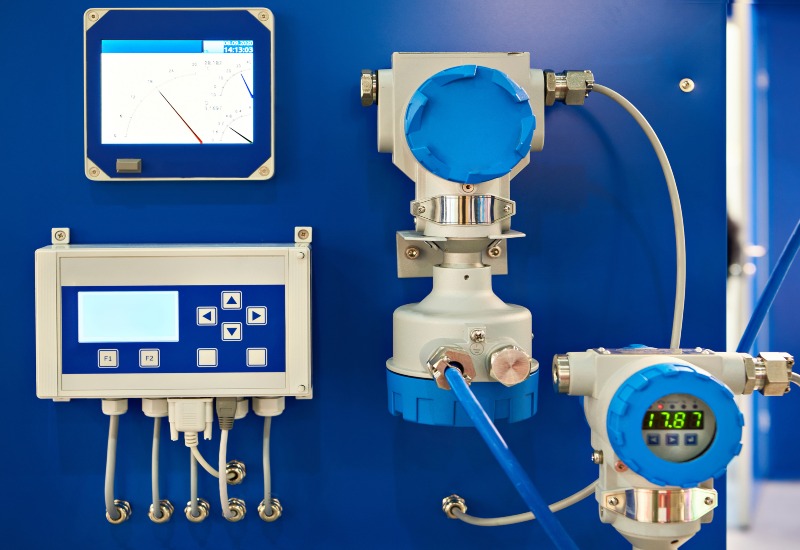
A swimming pool chemical controller connects to sensors that sit directly in your pool plumbing. These sensors measure water chemistry in real time as water flows past them and send data back to the central controller unit. If the levels drift away from your setpoints, the controller activates your chemical feed pumps or salt chlorine generators. It adds exactly the amount of sanitizer or acid needed to return the water to balance. Once the levels reach the target, the controller turns off the feed systems. This process happens continuously, 24 hours a day, seven days a week.
Why Is a Chemical Controller Important?
Effective water management is essential in any commercial pool environment. Here’s how a chemical controller helps maintain safe swimming conditions while protecting your facility’s long-term investment:
- Enhanced Public Safety—Bather loads can shift quickly from quiet mornings to crowded afternoons. As a result, chlorine depletion can expose swimmers to bacteria and viruses.
- Immediate Sanitizer Response—A chemical controller detects drops in sanitizer levels as soon as they occur. It automatically increases chlorine production to meet demand.
- Pool Surface and Equipment Protection—Poorly balanced pH can cause significant damage to pool infrastructure. Acidic water corrodes plaster, heaters, and pumps, while high pH leads to scale buildup that clogs pipes and reduces efficiency.
- Long-Term Cost Savings—By keeping pH levels stable, a chemical controller extends the life of your pool’s interior finish and mechanical systems. It helps prevent costly emergency repairs and premature equipment replacement.
Key Features of a Pool Chemical Controller
Modern commercial pool chemical controllers include advanced technology to deliver accuracy, safety, and efficiency. Here’s an overview of their key features:
- Precision Sensing Technology—High-quality controllers rely on pH and ORP (Oxidation-Reduction Potential) probes to monitor water chemistry in real time.
- Clear Digital Monitoring—Modern units feature easy-to-read digital displays that show current chemical levels. It enables staff to assess pool conditions quickly.
- Proportional Chemical Feeding—Many systems feature proportional feed capabilities that dispense precise amounts to efficiently correct imbalances.
- Built-In Safety Lockouts—Prevent chemicals from feeding when the circulation pump isn’t operating. This feature protects plumbing lines from the dangerous buildup of chemical gases.
- Data Logging and Trend Analysis—Advanced controllers store historical data directly on the device for future review. Operators can analyze trends during peak usage times.
Why Automate Your Pool Chemical Management?
Relying on manual chemical management in commercial pools increases the risk of costly mistakes. Here’s how automation provides steady control, improving safety and swimmer comfort:
- Reduced Human Error—Manual testing and dosing leave room for missed tests, misread results, and incorrect calculations. Automated systems eliminate these variables.
- Consistent Chemical Balance—Adding chemicals manually often creates sharp spikes followed by gradual declines in sanitizer levels. Automation maintains a consistent chemical balance.
- Elimination of “Sawtooth” Fluctuations—Large, infrequent chemical additions create a “peaks and valleys” pattern where water is rarely at the ideal level. Automated control keeps levels stable.
- Improved Swimmer Comfort—Stable water chemistry feels better and safer for swimmers. Consistent levels reduce eye irritation and minimize strong chlorine odors.
Why Invest in Chemical Automation?
In addition to improving safety, investing in a commercial pool chemical control system is a wise financial decision. Here are the top reasons why you should consider investing in chemical automation for your commercial pool:
- Reduced Chemical Waste—Manual dosing often results in overuse. Automated controllers deliver only the exact amount needed, saving money on chemical supplies.
- Lower Labor Costs—Automation minimizes the time staff spend testing and manually dosing water. They have more time to focus on other essential facility tasks.
- Minimized Liability Risks—Poor water quality can lead to health department shutdowns or costly lawsuits from sick or injured guests.
- Documented Compliance—Automated systems keep digital records of water chemistry and dosing activity. These logs provide proof of compliance with local health codes.
What Can Pool Automation Control?
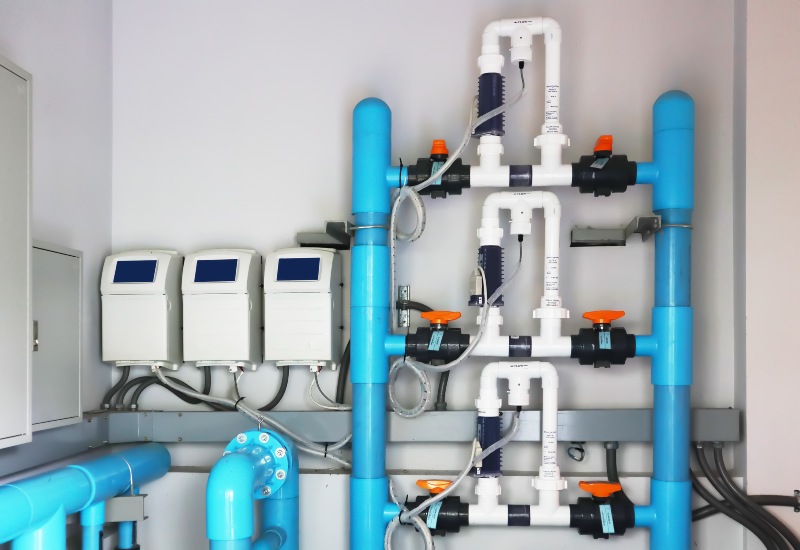
Modern commercial pool technology lets operators manage nearly every aspect of pool operation with ease. Here’s how pool automation offers convenience with more control:
- Comprehensive Chemical Control—Most systems automatically manage pH and sanitizer levels. They dispense acid or CO₂ for pH and use liquid chlorine, tablets, or salt cells.
- Automated Temperature Management—Advanced controllers can monitor water temperature and operate heaters to maintain consistent comfort.
- Water Level Maintenance—Auto-fill devices detect drops caused by splashing or evaporation and automatically add water.
- Filtration and Pump Control—Automation can trigger backwashing or adjust variable-speed pumps based on pressure readings and usage patterns.
- Integrated Amenities and Safety Systems—Some systems control lighting, water features, and UV sanitation devices to create a fully integrated ecosystem.
Benefits of Having a Chemical Controller
Monitoring chemical control in a commercial pool benefits everyone, from swimmers to staff to facility owners. Here are the main benefits of installing one for your commercial pool:
- Enhanced Swimmer Experience—Balanced pH keeps water soft, clear, and comfortable, reducing skin and eye irritation.
- Simplified Maintenance—Staff gains reliable data to make informed decisions rather than reacting to constant chemistry issues.
- Extended Equipment Life—Pool pumps and heaters last longer and require fewer costly repairs from corrosion and scale buildup.
- Compliance and Professionalism—Automated chemical control demonstrates a high standard of management to health inspectors with digital records and consistent performance.
- Remote Monitoring and Alerts—Many systems offer smartphone access to check pool status from anywhere.
What Are the Chemical Controller Drawbacks?
Automated chemical control systems significantly improve pool and spa management, but they still require consistent human supervision. Here are a few drawbacks worth noting:
- Probe Maintenance Is Critical—Sensors such as pH and ORP probes require regular cleaning and calibration to function accurately.
- Mechanical Components Can Fail—Feed pumps, squeeze tubes, and injectors can wear out, leak, or become clogged with calcium buildup.
- Daily Manual Verification Is Essential—We recommend performing manual water testing to confirm that the controller’s readings match actual pool conditions.
- Maintain Proper Water Flow—Clogged strainers or restricted circulation can distort measurements and reduce system effectiveness.
FAQs About Chemical Control Automation
Most standard chemical controllers measure chemical concentration. However, advanced automation systems can integrate with flow meters. These flow meters measure the volume of water flowing through your system in gallons per minute. Some setups can also track makeup water usage.
To use online monitoring features, your controller needs an internet connection. Most modern units offer Wi-Fi or hardwired Ethernet connectivity. Wi-Fi works well if your pump room has a strong signal. If the pump room is in a basement or thick concrete bunker, a hardwired Ethernet cable usually provides a more stable link.
Most commercial pool chemical controllers use an ORP probe. ORP stands for Oxidation-Reduction Potential. It doesn’t measure chlorine concentration in parts per million (PPM). Instead, it measures the water’s ability to kill contaminants. ORP tells you how effectively your sanitizer is working at that moment.
Take Control of Your Pool Chemistry
If you’re ready to upgrade your commercial swimming facility, trust Millennium Pools & Spas for Virginia, Washington, D.C., and Maryland pool automated chemical control. Our company brings over 30 years of combined experience to your pool deck. We can program your chemical control system specifically for your pool’s volume and usage patterns. You can save money, reduce liability, and provide a superior swimming experience for your guests. Contact us today to take the next step toward easier pool management or fill out our online contact form to schedule a consultation.